AI visibility just became part of your job. It doesn't have to take over your week.
If you own a product's growth, AI answers are now part of how buyers find you, often before they reach your site. Working out what those engines say about you, and what to do about it, usually means a lot of reading up on a field that's moving fast and full of noise.
What this usually looks like
The field is new, and it's loud
Every week brings another tactic and another tool. Sorting out what actually gets a brand named in AI answers takes time you'd rather spend on the product.
Generic advice doesn't fit your product
Being told to write an article you've already written, or to fix something unrelated to what you sell, costs more time than it saves. When a fix concerns a page you already have, the briefing names that page.
Tracking everything is how nothing gets fixed
Watching every possible query is overwhelming. Start with the queries that make business sense for your product, and fix what the evidence points to. Fewer wasted hours, more fixes that land.
The modules that matter most
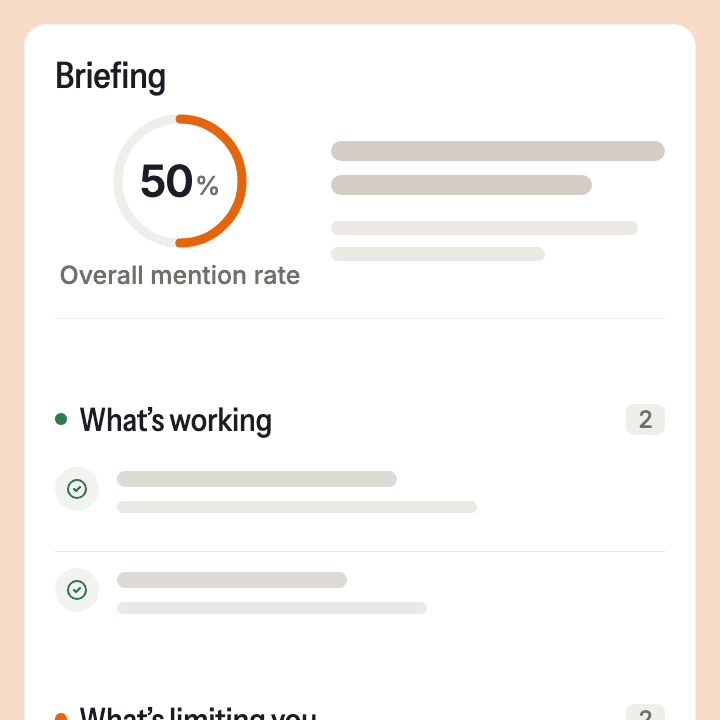
Briefing
One plain-language verdict each week: what's working, what's costing you visibility, and what to fix first.
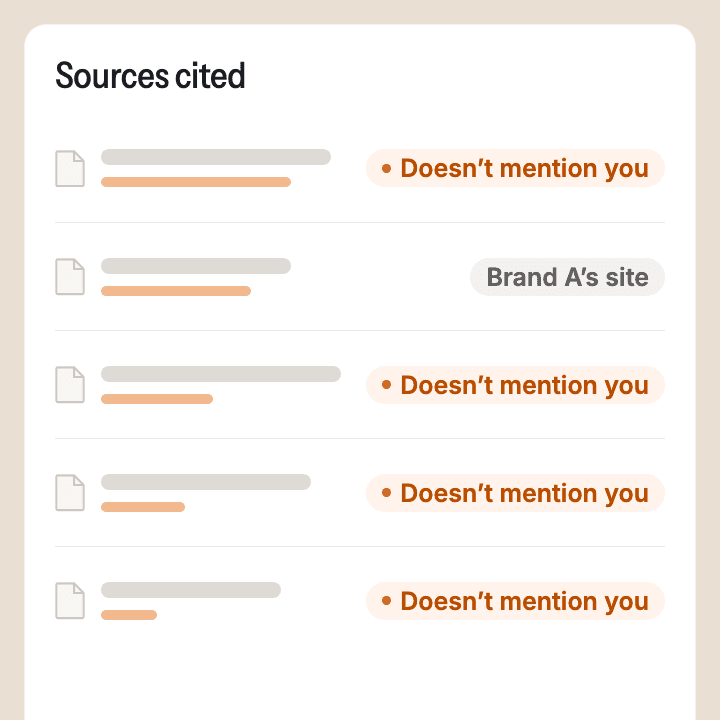
Competitors
Which brands get named instead of you, and the pages the engines cite most that don't mention you yet, so you know where to get mentioned first.
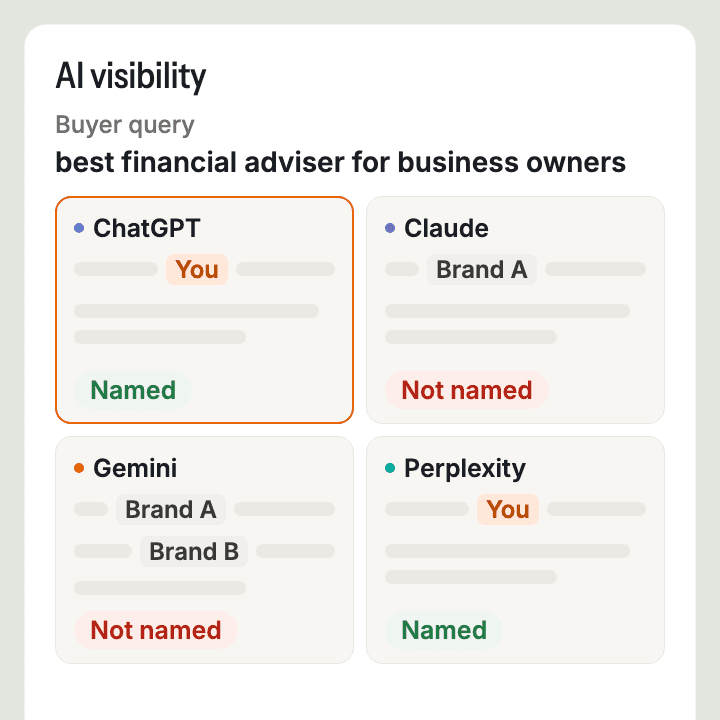
AI visibility
Whether ChatGPT, Claude, Gemini and Perplexity name your product on the queries your buyers ask, in each engine's own words.
AI visibility without the noise.
You get the evidence and what to fix first, so AI visibility stays one part of your week.