You don't have a marketing team's day to spend reading dashboards.
At most early-stage companies, the founder is still the one who notices when organic traffic dips or a competitor starts showing up ahead of you in AI answers, but there's rarely time to become an SEO analyst on top of everything else.
What this usually looks like
You need the verdict, not the raw data
You don't need eleven charts. You need to know, in a sentence: is visibility getting better or worse, and what's the one thing to fix this week.
You're probably already paying for more than one tool
A rank tracker, an SEO crawler, maybe a separate AI-mention tool, and still stitching the story together yourself before a board update or a Monday standup.
AI visibility is a new, unfamiliar risk
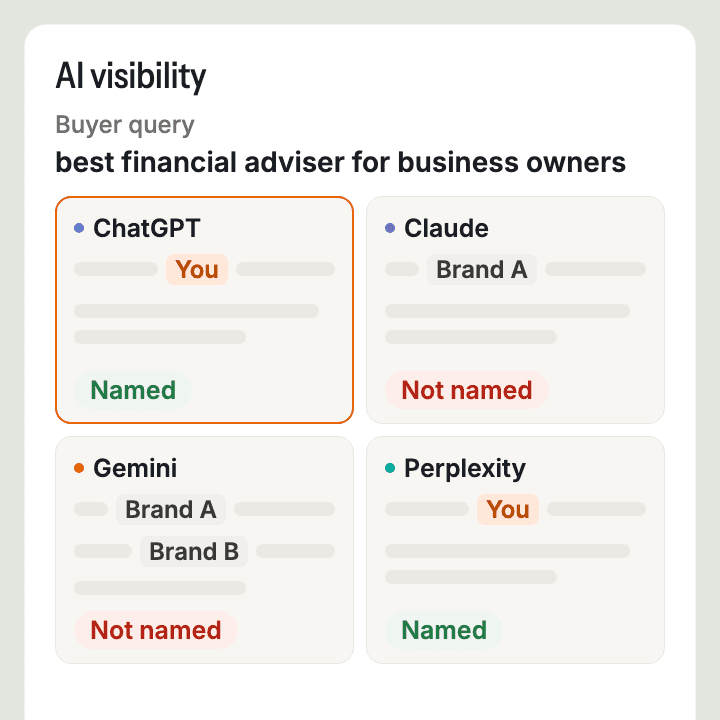
Buyers can now ask ChatGPT, Claude, Gemini and Perplexity before they visit your site. If you don't know what those tools say about you, you can't tell whether they name you or a competitor. Start with the handful of questions that come up in your sales calls, and you'll see, query by query, whether they name you and who they name instead.
The modules that matter most
Briefing
The one thing to read before a board update or investor call: the verdict, what's costing you visibility and what to fix first.
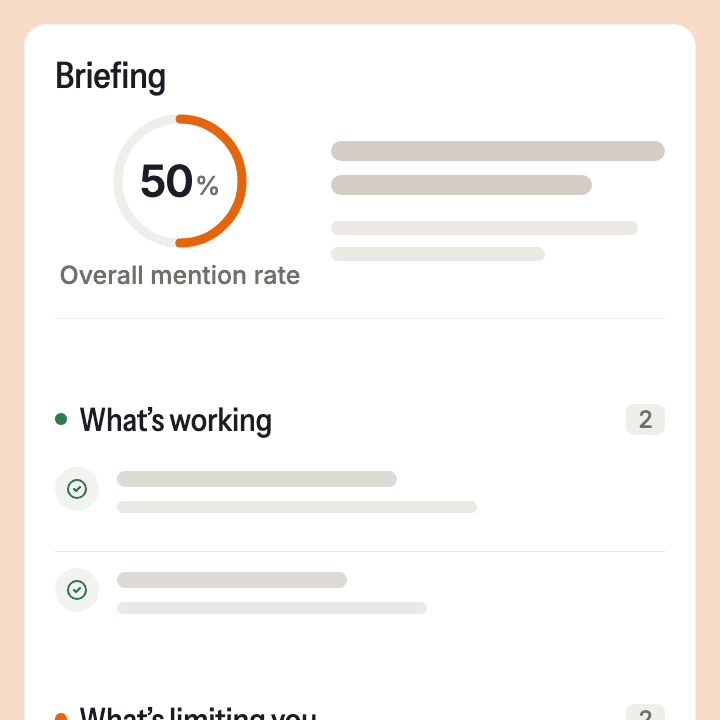
AI visibility
Whether ChatGPT, Claude, Gemini and Perplexity are naming you or a competitor when it matters.
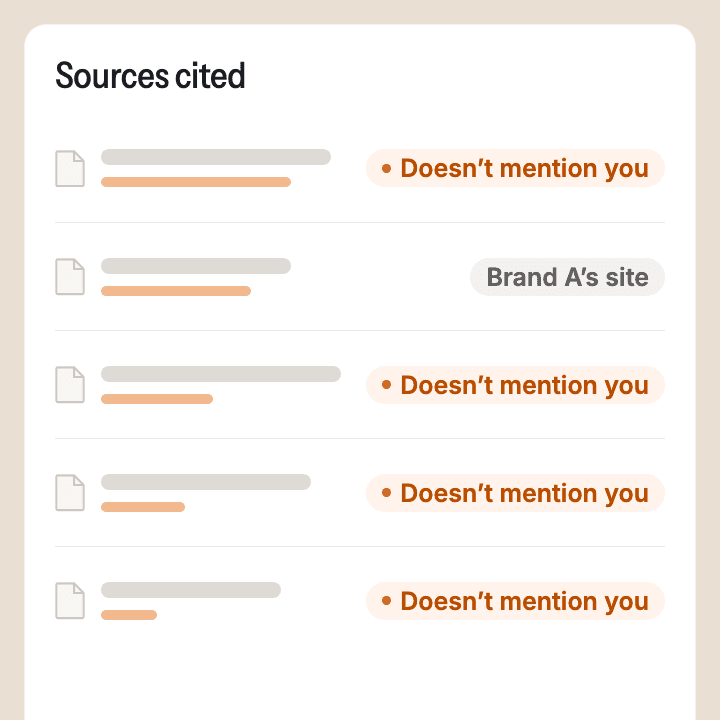
Competitors
A straight leaderboard of you against the competitors you track, query by query: who's ahead, by how much, and which sites the engines cite when they name someone else.
See whether AI names you or a competitor.
You want to know, in five minutes a week, whether what you're building is visible to the people looking for it.