Stop being the person who has to translate four dashboards for everyone else.
You're the one who actually executes (rewriting a page, fixing a broken link, adding schema), and right now that means logging into three or four separate tools just to figure out what needs doing today.
What this usually looks like
Scores don't tell you what to change
An SEO score of 62 doesn't tell you which page, which fix, or why. You need issues flagged by severity, on the actual page, with the actual reason.
Content QA is manual and easy to skip
Checking every new page for AI-answer readiness (meta tags, structure, readability) takes real time, so it stops happening under deadline pressure.
Schema and structured data get deprioritised
Everyone agrees it matters. Almost no one has time to audit it page by page and hand-write the JSON-LD.
The modules that matter most
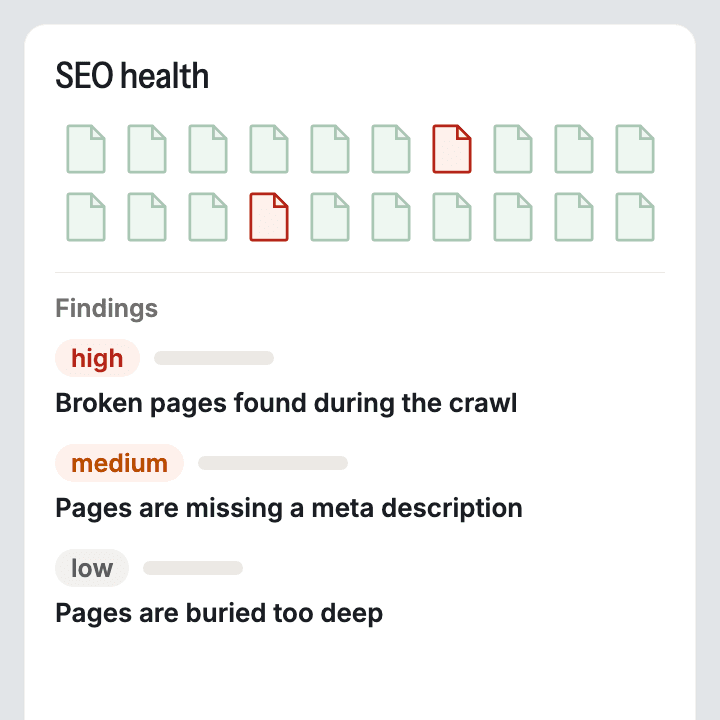
SEO health
A full technical crawl (broken links, redirect chains, duplicate meta, orphan pages) flagged by severity first, with the full per-page detail exportable whenever you want it.
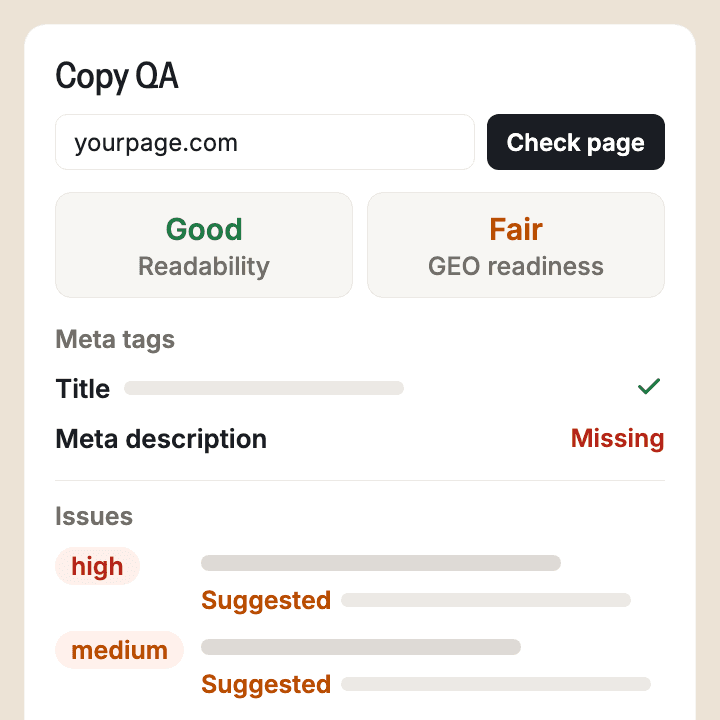
Copy QA
Run any page through a structured AI-answer readiness check, issues flagged by severity with a fix for each one, so QA stops being the thing that gets skipped.
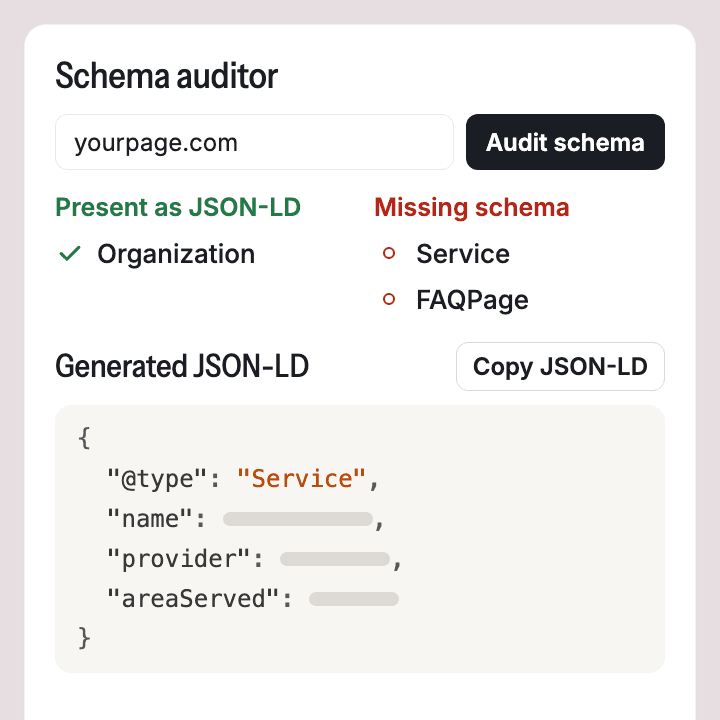
Schema
Missing structured data by page type, explained plainly, with ready-to-paste JSON-LD generated for you.
Less translating, more fixing.
Pick the queries your pipeline depends on, and the briefing says what to fix first, with an impact rating on each action and the page named when the fix belongs on one.